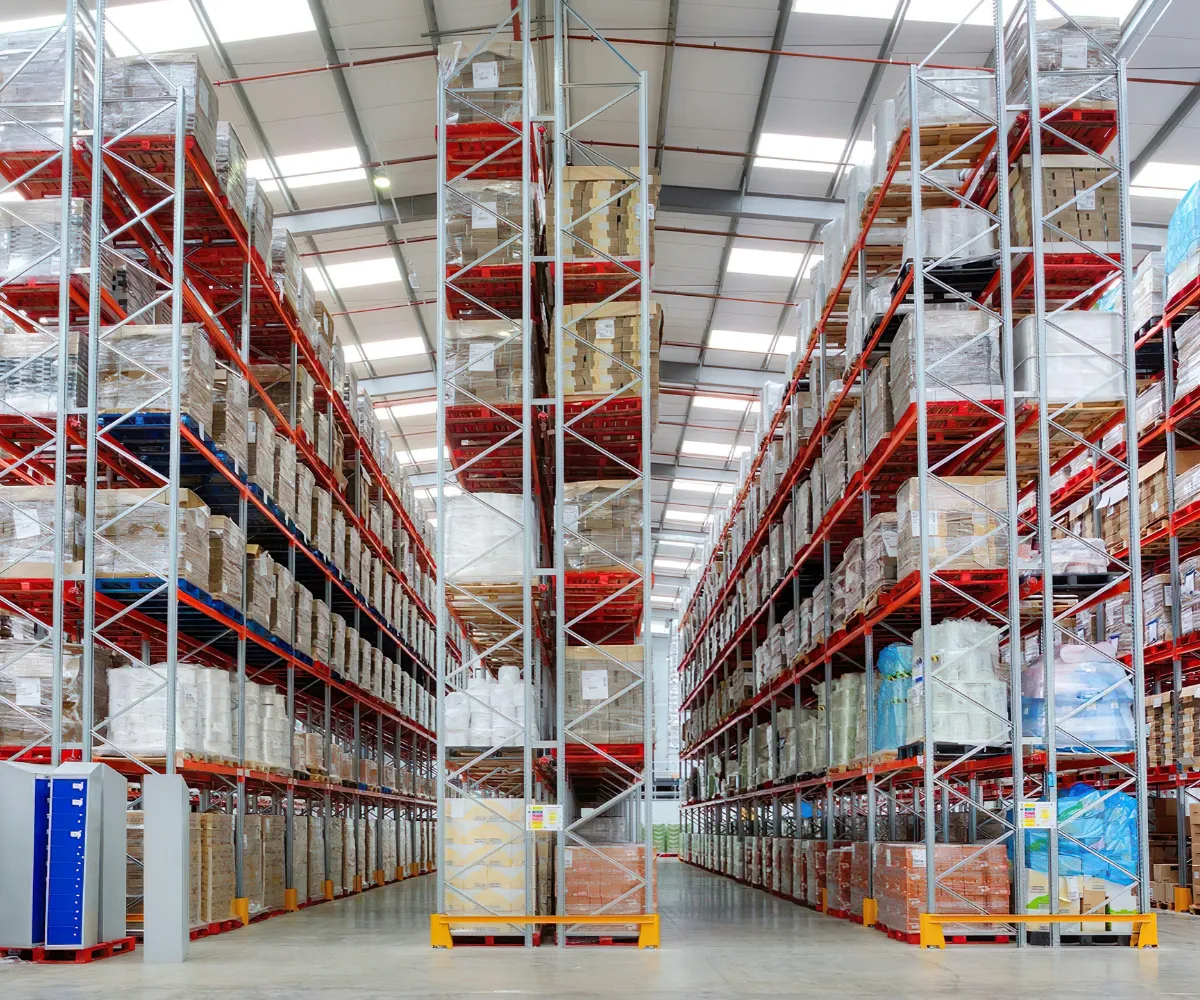
Order picking is one of the most labour-intensive and costly stages of warehouse work. It’s where errors happen most easily – but also where the biggest optimisation opportunities lie. Choosing the right picking strategy – matched to the type of products, the warehouse layout and the number of orders – can bring measurable benefits: shorter lead times, lower labour costs and greater customer satisfaction. Today, optimising picking is not just a matter of work organisation, but one of the main elements of an effective warehouse management strategy.
The key role of the picking strategy
Order picking is the heart of every warehouse. How the picking process is organised determines the pace of fulfilment, shipping accuracy and work efficiency. The picking strategy defines how the warehouse gets from order to shipment – it directly affects lead times, labour costs, space utilisation and error rates. A well-chosen method can reduce the distance operators travel, streamline the work of entire teams and significantly lower operating costs. A sub-optimal strategy often leads to overloaded staff, picking errors and congestion in packing areas. As a result, complaints rise and the warehouse loses efficiency. That’s why analysing processes and choosing the right picking method is today one of the key elements of logistics management.
The most popular picking methods
Modern warehouses use several basic picking methods. The most common include:
- Single order picking – picking one order at a time; the operator collects products for a single order, which ensures high accuracy but can be less efficient with many small orders.
- Multi order picking – picking several orders at once; shortens travel time around the warehouse and increases productivity.
- Zone picking – the warehouse is divided into zones, and staff pick only the products assigned to their part of the warehouse; works well in large logistics centres.
- Pick & pass – a method linking zones by passing the order along; products are picked successively in different areas and handed on until the order is complete.
- Wave picking – picking in “waves” in which orders are grouped by priority, shipping route or time window; makes it easier to plan work and control workload.
- Cluster picking – an employee picks several orders at once, e.g. on a cart with multiple totes, which minimises the number of trips and increases efficiency for small orders.
“Each method has its advantages and limitations. Single order picking works well in smaller warehouses handling large B2B orders, while multi order or cluster picking are ideal for e-commerce, where numerous small orders dominate. In large distribution centres, zone-based methods – zone picking or pick & pass – work better, shortening distances and balancing staff workload. Wave picking, in turn, allows picking time to be planned precisely around shipping windows and priorities. Of course, choosing the right strategy should be preceded by a detailed analysis of the processes and conditions in the particular warehouse – there is no one-size-fits-all solution, and effectiveness depends on an individual approach and the specifics of the operation” – says Janusz Pasternak, Senior Implementation Specialist at EX7, the vendor of XWMS.
Hybrid strategies and WMS flexibility
Warehouses increasingly don’t limit themselves to a single picking method. They use hybrid strategies that combine different approaches depending on the type of products and warehouse zone. One zone can use multi order picking, while another uses single picking for bulky products.
As Janusz Pasternak explains: “Hybrids are the norm today. For example, one part of the warehouse can use multi order picking for fast-moving goods, and another single picking for slow movers. The key is being able to configure strategies flexibly.”
In this context, WMS systems play a major role by automating the planning and execution of processes. Solutions such as XWMS make it possible, among other things, to configure issuing rules (FIFO, LIFO, FEFO), create 2D and 3D warehouse maps, choose the best picking paths and monitor work efficiency. The system can automatically group orders, optimise routes and record staff performance, allowing processes to be improved continuously.
The industries that benefit most
The industries that benefit most from matching the picking method correctly are those where speed, accuracy and control of stock rotation count – such as e-commerce, electronics and pharmaceuticals.
In e-commerce, what matters is quickly handling many small orders and minimising errors. In electronics, high precision and a wide variety of products are important, requiring proper route planning and order grouping. In pharmaceuticals, strict control of batches and expiry dates and compliance with FIFO or FEFO rules are essential.
“Changing the picking strategy can bring measurable results in a short time. One example is an e-commerce centre handling many small orders that switched from single order picking to multi order or cluster picking. As a result, the distance travelled by an employee fell by around 30%, and the number of lines picked per hour rose by 40%. Improvements like these translate directly into shorter lead times and lower operating costs” – adds Janusz Pasternak of EX7.
Technology and automation in the service of picking
Modern picking strategies are increasingly supported by technology. Voice picking, pick-to-light and RFID significantly increase accuracy and speed while minimising the risk of human error. Solutions based on mobile robots and artificial intelligence (AI) are also becoming more popular. AI analyses data in real time and selects the optimal picking strategy for the current warehouse workload. This makes it possible, for example, to switch automatically between single and multi order picking depending on order priorities.
“A picking strategy isn’t a one-off process. It should be monitored continuously and updated based on data from the KPI reports generated by the WMS. It’s worth reviewing it operationally every quarter and strategically every 6–12 months, analysing, among other things, stock rotation, changes in the product range and sales seasonality. That’s the only way to maintain high warehouse efficiency and respond to changing market conditions” – notes Janusz Pasternak.
A well-chosen order picking strategy not only increases productivity, but also reduces errors, improves the flow of goods and increases customer satisfaction. In an era of rapid e-commerce growth and logistics automation, flexible WMS systems such as XWMS are becoming the foundation of effective warehouse management. There is no single universal picking method. The key is analysing data and adapting the strategy to the warehouse’s real needs – only then can you talk about true optimisation.
Have questions? Get in touch with us.