Running a warehouse with high turnover, a constantly changing assortment and time pressure efficiently requires not only a capable WMS, but also a well-thought-out ERP integration. The XWMS implementation at Interpneu Polska shows how to build a consistent operational environment in which data and processes work in real time.
The challenge: complex logistics and a specific product
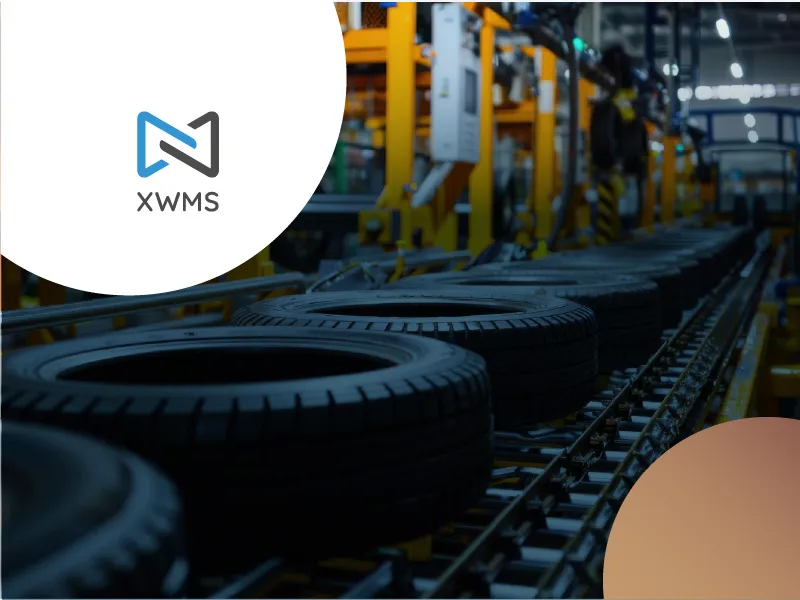
Interpneu Polska runs a warehouse that combines large scale with highly complex processes. It has around 2,500 pallet places, high-bay racking and clearly separated zones – from receiving and picking to returns and complaints. The key challenge is the nature of the goods. For tyres, what matters is not only the SKU or EAN code, but also the DOT number (production date), which determines how the goods are stored and rotated. This requires precise control of operations and eliminating the risk of errors down to the level of a single load carrier. The goal of the implementation was to organise processes, make them more repeatable and gain full control of stock levels from many perspectives at once.
The perspective of the project is well captured by Krzysztof Wieczorek, an independent expert and Project Manager who supported Interpneu during preparation and implementation:
“As a consultant helping Interpneu optimise its logistics processes, I initially advised on warehouse work organisation, but also on document flow and process design based on the enova365 ERP. However, growing turnover, a changing order structure and the cost of onboarding new employees clearly showed that further growth would require a dedicated warehouse management system. The search for a WMS vendor was based essentially on two main criteria: experience in the tyre industry and experience integrating with enova365. EX7 met both conditions.”
– Krzysztof Wieczorek, independent expert and Project Manager.
XWMS as the hub of warehouse operations
XWMS covered all key processes – from receiving through picking to shipping and returns – organising them and giving them a consistent, process-driven structure. Receiving was set up as a two-step model. In the first step, warehouse staff scan the tyres and build load carriers in the form of cages or pallets; in the second, they take them to the target locations. The system supports operators by suggesting storage locations while leaving them flexibility, which is important in a dynamic warehouse environment. A key element is controlling product parameters – XWMS treats the DOT number as a critical batch attribute and automatically prevents tyres with the same SKU but different production dates from being mixed on one load carrier.
“In warehouses like this, the key is combining control with flexibility. The system has to enforce critical parameters such as DOT, but at the same time it can’t block the operator’s work. That’s why in XWMS we combine validation mechanisms with suggestions rather than rigid restrictions. We also placed great emphasis on guiding the operator through the process (both during receiving and picking), so that decisions are made in the system rather than ‘in someone’s head’. This translates not only into fewer errors, but also into faster onboarding of new employees and more repeatable operations.” – says Jakub Wajda, board member of EX7 and coordinator of the XWMS implementation at Interpneu.
The system also supports cross-docking, which for part of the assortment (especially goods ordered for specific customer orders) allows the storage stage to be skipped. The goods go straight to the packing zone, which significantly shortens lead times and reduces the number of warehouse operations.
For picking, XWMS supports several models, including Single Order Picking, Single Order Zone Picking and Multi Order Zone Picking. The issuing strategy takes into account, among other things, a FIFO queue, zone prioritisation and picking first from the location with the lowest stock, which helps make optimal use of warehouse space. Warehouse staff work is further organised by system-defined picking paths that guide operators through the warehouse according to the chosen mode, e.g. only from the lower or upper rack levels, or in a mixed mode.
Packing and shipping were integrated with verification processes and external systems. Every item is scanned before packing, which eliminates the risk of errors. XWMS automatically synchronises data with the ERP, triggering the issue of sales documents, and supports the generation of shipping labels. The system also takes additional packing instructions into account, and the process is closed by confirming the packed order with a scan of the shipping label.
The system also handles special processes such as deposits, re-indexing of goods and various stocktaking modes. All of this is complemented by shortage handling and real-time operational reporting that supports day-to-day management of warehouse space.
Integration with enova365: an architecture based on Soneta add-ons
One of the key elements of the project was integrating XWMS with the enova365 ERP system, designed as a two-way, fully consistent data exchange. It covers both pulling product information into XWMS and synchronising commercial documents in both directions, ensuring that operational data stays consistent across the whole environment.
Soneta.Integrator plays the central role in this architecture as the communication layer responsible for stable, scalable and controlled data exchange between the systems. Using Soneta.WebAPI, the Integrator manages the flow of information and its reliable processing, which is crucial in a high-intensity operational environment.
The implementation and development of enova365 on Interpneu’s side was handled by enova.expert, which also took part in designing the processes and preparing the ERP environment for the integration with XWMS. On the ERP side, the Soneta.WMS add-on mapped the warehouse process logic, linking operations carried out in XWMS consistently with enova365 documents and structures. The architecture was complemented by a dedicated library, enovaexpert.PneuXWMSHelper, which extends the standard mechanisms with functions tailored to the client’s specific operational requirements. This approach not only ensured full data consistency, but also created a flexible integration environment ready to grow with the scale of operations.
“In projects like this, the key is not just connecting systems, but above all mapping business processes properly and keeping operational data consistent. At Interpneu, it was also important to keep the whole environment flexible and to be able to develop the integration further as operations grow. Using Soneta.Integrator and dedicated extensions made it possible to create a solution tailored to the organisation’s real needs.” – says Łukasz Lech, CEO of enova.expert.
In practice, the integration means that the ERP sends instructions (purchase and sales orders) to XWMS, and the WMS manages their execution and reports back.
The result is warehouse and commercial documents generated automatically in enova365. Importantly, as soon as fulfilment of a document starts in XWMS, the document is locked in the ERP, eliminating the risk of parallel editing and inconsistent data. The integration was extended with additional elements such as handling attachments transferred in Base64 format, passing on payment and cash-on-delivery information, and data resynchronisation mechanisms.
The result: efficiency and readiness for growth
The XWMS implementation at Interpneu delivered measurable operational results. Standardised processes driven by the system reduced errors and sped up order fulfilment. Thanks to the integration with enova365, the company gained a consistent working environment in which data is up to date and available in real time. At the same time, an architecture based on Soneta components and extensions allows the system to be developed further without rebuilding its foundations.
“For us, the biggest change after the implementation was predictability and well-organised warehouse processes. Given the scale of our operations and the specifics of the tyre industry, it was crucial to reduce errors and improve the flow of information between the warehouse and the ERP. XWMS allows us to control operations better, identify discrepancies faster and manage warehouse work more efficiently in real time. Another big benefit has been simpler onboarding of new employees – the system guides the operator through the process, which makes it easier to keep operations repeatable regardless of the team’s experience. From the company’s perspective, it was also important that the integration with enova365 gave us consistent data and greater transparency across the entire logistics process.” – says Mariusz Grzelak, CEO of Interpneu Polska.
Technology that supports operations at scale
The Interpneu case shows that a successful WMS implementation is not just about system functionality, but above all about integrating it with the business environment.
In this project, XWMS became the central operational hub, and the use of components such as Soneta.WMS and Soneta.Integrator made it possible to build a stable, scalable and flexible environment that genuinely supports day-to-day logistics.
As Krzysztof Wieczorek sums up:
“The implementation was carried out practically by the book – from the pre-implementation analysis and process maps to the software set-up, testing and go-live. Using the integrator on offer made it possible to connect the ERP with the WMS efficiently and pass on information that is key to operational efficiency in real time. The ERP, the WMS and the integration tool all performed so well that just a few days after go-live we could talk about the system stabilisation phase. At the same time, expert support from the enova365 partner and the WMS vendor allowed lightning-fast hotfixes for shortcomings that slipped through testing, as well as quick implementation of useful functions we hadn’t foreseen at the analysis stage. The WMS implementation at Interpneu and its integration with enova365 is one of the best implementations I’ve seen in my career. It was the result not only of mature IT solutions, but also of the commitment of everyone involved.”